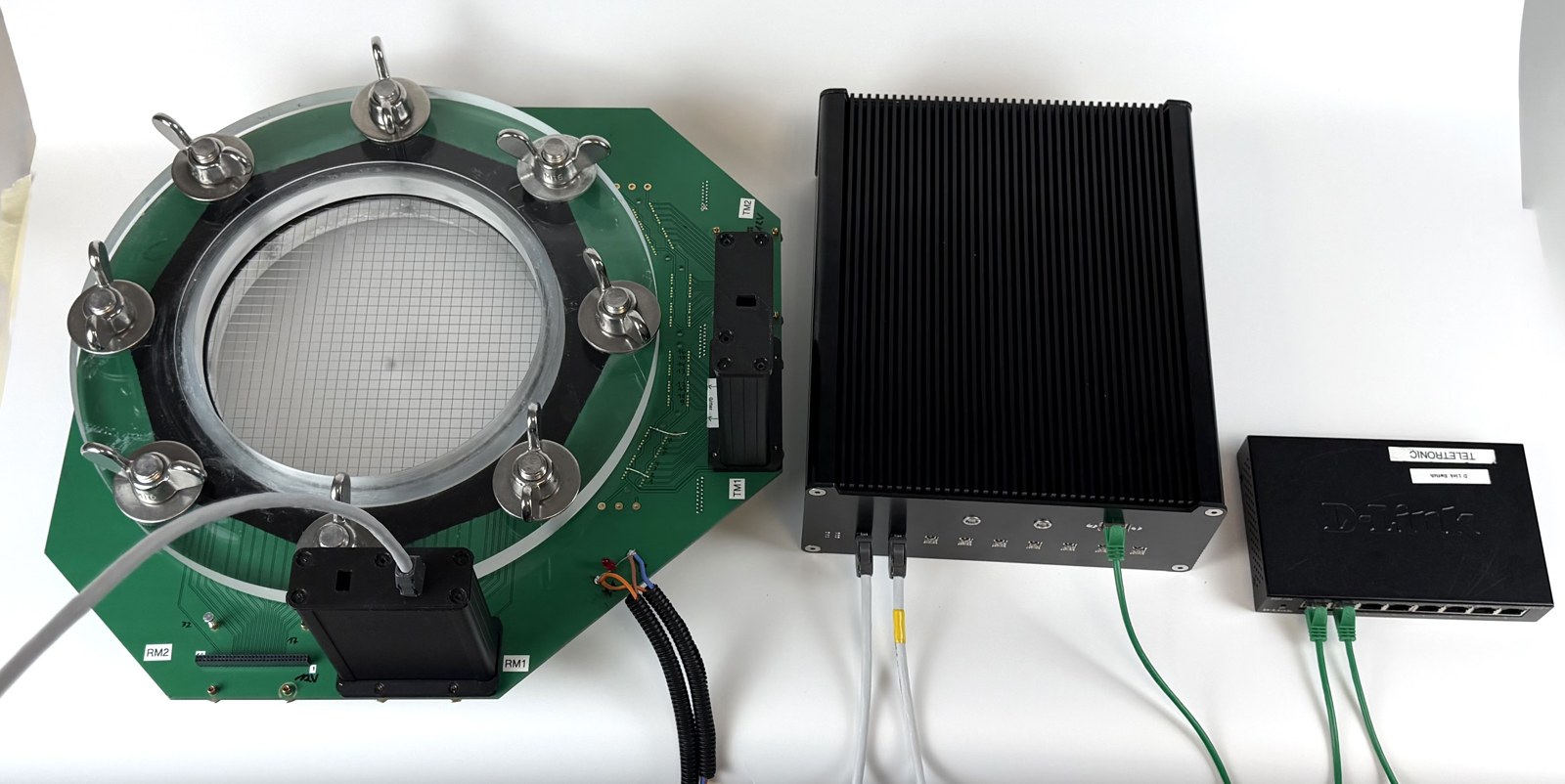
A campaign with a defined outcome
Temporary instrumentation can support a design comparison, troubleshooting or pre-series validation. Installation requires a planned intervention and a suitable measurement section. Duration and deliverables depend on technical fit and the agreed test plan.
Specify the component, transient and design decision.
Review fluid, geometry, temperature, pressure, access and the effect of an intrusive grid.
Agree references, operating points, synchronisation and comparison metrics.
Receive agreed data and interpretation, including uncertainty and measurement limitations.
Agree the deliverables before the test
Measurement positions and operating matrix; calibrated data within the validated scope; event and spatial statistics; comparison of variants; a findings review with assumptions and limits. Export formats and integration with existing test-bench signals are agreed during scoping.
Where the measurement fits
Conductivity for suitable conductive media; capacitance for suitable low-conductivity media. Calibration is fluid- and temperature-dependent. Wires contact the fluid and may influence the flow. Sticky deposits, fibres and sludge can foul the grid. No insertion into combustion chambers, gear contacts or rotating blade paths. Cryogenic and other demanding conditions require a separate feasibility assessment.
One campaign or continuous monitoring
A completed campaign may answer the development question on its own. Where repeated monitoring adds value, a separate pilot can evaluate permanent integration.
Explore the permanent-installation pilot →